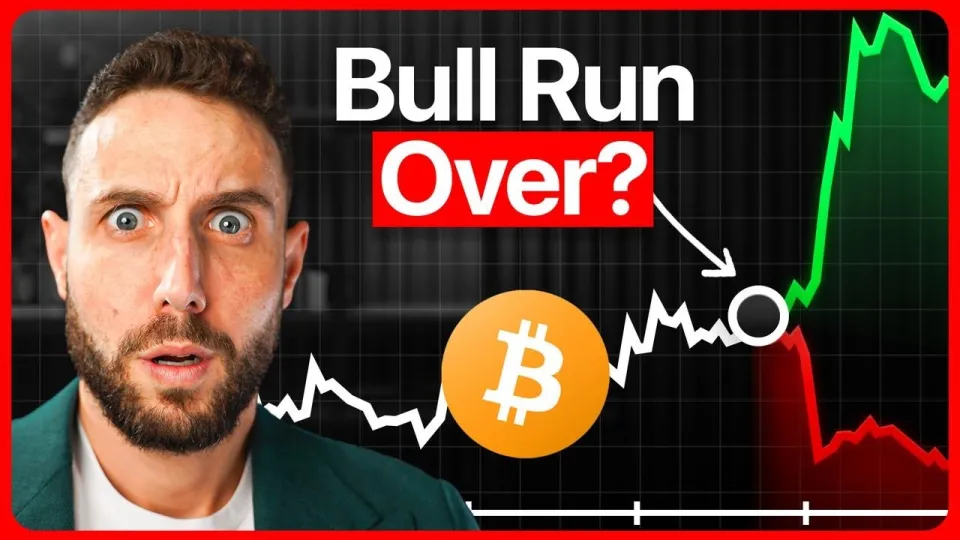
Can Bitcoin Still Save the Crypto Bull Run With a Weekly Close Above Key Support?
You can order the same kind of articles for your own video to boost it on YouTube and Google. Just message the Telegram bot @sat_sit_bot. The bot writes and publishes the articles itself (with your YouTube video embedded) on popular topical websites (no ads). Your first 50 articles are free.
· based on the channel EllioTrades
Key takeaways
- The weekly BTC close is the single trigger: holding support keeps the bull case alive, losing it puts lower lows on the table for most altcoins.
- EllioTrades frames the setup as a two-day decision window and publishes a concrete plan for BTC plus the altcoins he wants to buy if support holds.
- Bitcoin dominance is the risk flag: a dominance breakout usually drains altcoins even when BTC itself looks stable.
- Shorting a beaten-down altcoin such as NEAR into support is one of the most contested calls in the plan.
- A separate catalyst sits outside crypto: the MSCI review of digital asset treasury companies such as MSTR, with a decision expected within days.
Bitcoin can still save the crypto bull run, but only if the weekly candle closes above support rather than below it. In his breakdown, EllioTrades treats the upcoming weekly close as a two-day decision window: hold the level and the uptrend structure stays intact, lose it and the market has to price in a deeper retracement and lower lows across most altcoins. The practical stance is to trade the reaction, not the prediction, and to keep position sizing small enough that a failed close is survivable; the same approach applies whether you use a standard exchange account or a prediction market such as Kalshi, where new users can claim a $50 trading credit.
Why the weekly close matters more than any single candle
A weekly close is the only price print that cannot be faked by an intraday wick, which is why it carries so much weight in this plan. Bitcoin can flush through support on a Tuesday and reclaim it by Friday without invalidating anything, but a Friday close below the level turns that support into resistance and forces a re-rating of the whole risk curve.
The mechanics are simple:
- Identify the support zone that has held on previous weekly closes.
- Wait for the weekly candle to finish, not for a 4-hour break.
- If the close is above support, add risk gradually; if it is below, reduce exposure and wait for a reclaim.
This is also why the two-day framing is not clickbait. Most of the damage in crypto happens in the final hours of a weekly candle, when liquidity thins and stop hunts run through obvious levels. A trader who plans for that window in advance behaves very differently from one who reacts to a red candle on a Sunday night.
The bull case and the bear case in one frame
Holding support keeps the higher-timeframe uptrend valid and makes the current pullback a normal retracement inside a bull market. In that scenario the playbook is accumulation: scale into quality names on strength, keep a cash buffer, and let the market confirm before adding size.
Losing support changes the probabilities rather than the story. A weekly close below the zone opens the door to a sweep of lower liquidity, a longer consolidation, and a market where rallies get sold. Nothing about that outcome requires a multi-year bear market, but it does require smaller size and tighter invalidation.
The honest framing is that both paths are live until the candle closes. Traders who flip from maximum bullishness to maximum bearishness on a single retrace are the ones who get whipsawed, and that emotional swing is exactly what a written plan is designed to prevent.
Bitcoin dominance is the real altcoin risk
Bitcoin dominance rising is the quiet threat to every altcoin position, because BTC can look stable while the rest of the market bleeds. When dominance breaks out, capital rotates into Bitcoin and out of everything else, which is why a green BTC chart is not automatically good news for a portfolio full of alts.
The defensive rules that follow from that:
- Treat a dominance breakout as a signal to trim the weakest altcoin positions first.
- Avoid adding to alts simply because BTC is holding support.
- Keep the largest allocation in BTC or stablecoins until dominance stalls.
- Watch the BTC pair charts, not just the USD charts, for altcoins you hold.
This is the scenario where lower lows on the majority of altcoins happen even if Bitcoin never breaks down. It is the single most common way traders get the direction of Bitcoin right and still lose money.
Which altcoins are worth buying if support holds
The buy list only activates after the weekly close confirms support, and it is built around assets with clear invalidation levels rather than narrative alone. The plan favors scaling in on strength, keeping each position small relative to the total portfolio, and defining the exit before the entry.
Two practical cautions apply to any altcoin buy in this setup. First, a very short bear market tends to produce a weaker follow-through rally than a long consolidation, so expectations should be sized accordingly. Second, shorting a beaten-down altcoin such as NEAR into support is a low-reward trade even when the trend is down, because the bounce from an oversold level can be violent.
Questions traders keep asking about this setup
A recurring doubt is whether wanting a major setback to buy cheaper crypto even makes sense. The counterargument is fair: if the bull market is confirmed, paying higher prices through dollar-cost averaging is a feature, not a bug, because confirmation raises the probability of larger gains. The resolution is to separate the two jobs, holding a core position that does not depend on a dip, and keeping a dry-powder allocation for a flush.
The second recurring question is about timing and targets. A move back toward six figures followed by a drop into the high five figures or lower is a scenario, not a promise, and "buying opportunity" has to be defined numerically in advance: a specific zone, a specific size, and a specific invalidation. Without those three numbers the phrase means nothing.
A third theme is macro and index risk. The MSCI review of digital asset treasury companies, including MSTR, is a genuine catalyst that sits outside crypto price action, and a decision is expected within days. Index inclusion affects passive flows, so the outcome can move Bitcoin-correlated equities independently of the weekly candle.
The fourth theme is skepticism, and it deserves a straight answer. Claims that the market is manipulated, that weekend liquidity makes retail powerless, or that crypto is a pyramid scheme are not arguments you can trade against, but they are a reminder to size positions so that being wrong is boring rather than ruinous.
Tools and links from the breakdown
- Kalshi: trade $50 and get $50 in credit
- Liquid: trade any market with 10% off trading fees
- WEEX: deposit $100 and unlock up to $4,000 in bonuses
- fomo: follow the public trading journey
- EllioTrades on X
The bottom line for Bitcoin traders
Bitcoin's bull run survives or fails on the weekly close, and the next two days are the decision window. If support holds, the plan is to add risk in stages, watch dominance for signs of an altcoin drain, and buy the altcoins on the list only after confirmation. If support breaks, the correct response is smaller size and patience rather than a complete change of worldview. Either way, the levels and the invalidation should be written down before the candle closes; if you want to hedge or express a view on the outcome, you can open a Kalshi account and claim the $50 credit. The full video breakdown, including the specific levels and the altcoin watchlist, comes from the EllioTrades channel.
Source: Bitcoin Has 2 DAYS to Save the Crypto Bull Run · Markdown version
Questions & answers
Does a weekly close below support end the crypto bull market?
Not automatically. A weekly close below support changes the probabilities: it opens the door to lower lows and a longer consolidation, and it argues for smaller position sizes. Many traders still keep a core allocation and wait for a reclaim of the level before adding risk again.
Why can Bitcoin hold up while altcoins keep falling?
Because Bitcoin dominance can rise while BTC trades sideways. Capital rotates out of altcoins and into Bitcoin, so altcoin USD charts bleed even though the BTC chart looks fine. That is why BTC pair charts and dominance matter as much as the BTC price itself.
Is shorting an oversold altcoin like NEAR a good idea?
It is a low-reward trade when the asset is already sitting on support. The downside left is limited while the bounce can be sharp, especially in a market that is still deciding whether the bull case holds. Most traders prefer to wait for a confirmed breakdown rather than short into support.
What is the MSCI decision about digital asset treasury companies?
MSCI has been reviewing whether companies whose main business is holding crypto, such as MSTR, should stay in its global indexes. A decision was expected within days of the breakdown. Index inclusion drives passive flows, so the outcome can move crypto-linked equities independently of Bitcoin's weekly candle.